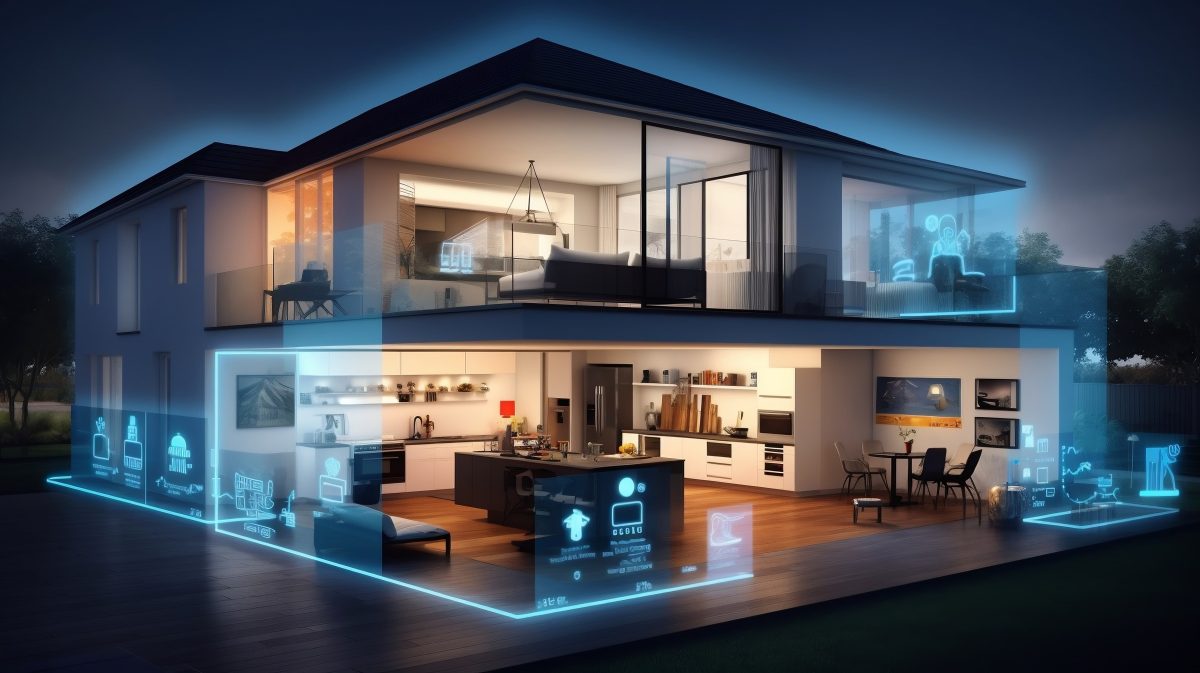
The use of the technology of smart home technology has become an essential characteristic of modern residential style. The growing desire of homeowners who want more control, comfort, and efficiency in the structure is one factor that drives architects to directly use digital systems in the planning process of the structure. This has changed the design philosophy, where technology is merely an add-on feature to a design philosophy that is all-encompassing and incorporates technology into the core of a home. Contemporary architecture has come to focus on settings that are responsive to users, simplify day-to-day activities, and ensure sustainability.
The Architecture of Homes Connected Systems
The concept of an integrated smart home starts way before it is built. The architects should also take into consideration the manner in which interrelated systems will interact in the layout; the planning of wiring, control hubs, and positions of devices should also be done in a subtle manner. Careful planning ensures that the lighting system, climate control, automated shading, and security system will work without disturbing the visual harmony.
The current homes are prone to having pre-designed wiring channels and device network infrastructure. This will minimize the structural changes that will be required in the future and allow more advanced systems to be implemented over time. In most of the projects, the home owners seek the advice of an expert architect in Boulder at the planning stage so that the building can accommodate the current technology as well as it should be able to accommodate further modifications. They are to moderate the architectural vision and the integration of functional technology.
Designing Engaging, Consumer-Friendly Home Spaces
Making smart home design contributes to facilitating an easy lifestyle. Smart thermostats that learn user preferences and ensure the comfort of indoors with a minimum of intervention can be done, as well as automated lighting that responds to natural daylight. Smart vessels can make everyday life easier, and sound systems have the ability to centralize sound experiences across the house.
These characteristics define the way individuals deal with their homes every day. When systems are designed in harmony, there is no need for residents to think about each device in isolation. Rather, the home is a system of integration that is responsive and dynamic. Architects strive to make spaces user-friendly to boost daily tasks so that technology does not take over them. An effective layout design will make interfaces user-friendly; controls are easy to follow, and the technology itself becomes a natural part of the design.
The Merged Approach to Sustainability: Intelligent Design
Intelligent homes are aiding in ecologically friendly architectural design. Instead of using the conventional means of energy control, architects are integrating both passive and intelligent features to reduce the amount of waste. Smart climate systems can also be automated to minimize heat usage, whereas automated shading can also adapt to occupancy to optimize energy consumption.
Another way that architectural planning takes into account the interaction of building materials and structural decisions with smart technology is through the use of smart technology. As an example, the layout of the window locations can maximize the use of natural lighting, which minimizes the use of artificial lighting as well as smart sensors to ensure the optimal conditions inside the building. When these factors are combined, the homes are much more effective and need fewer resources to ensure a comfortable life daily.
This sustainability and technology relationship promotes more flexible and sustainable technologies that are environmentally friendly and responsive to future needs.
Creating Homes to Get Better with Age
Modern architectural design requires flexibility. Technology changes at a fast pace, and this implies that homes should be constructed with scalability. Modular wiring installations, easy reach service panels, and central control hubs are also common features that architects use to facilitate future upgrades.
Architects are helping provide homes with spaces that can accommodate new systems without significant structural modifications, hence making them remain relevant in the coming years. It also involves the design of the possible security network extensions, entertainment systems, and home automation systems. Instead of the design of modern devices, the architectural approach aims at developing a robust framework that can be flexible to the coming changes with the emerging advancements.
Joint Planning to Achieve Successful Integration
The smart home projects require cooperation between the architects, designers, and engineers, as well as technology specialists, to be successful. Early coordination means that every system is compatible and that architectural aspects are in support of the required functionality. The location of sensors, electrical routing, ventilation, and equipment access are some of the decisions that must be planned in a collaborative manner to ensure smoothness of integration.
Effective communication is able to avoid the conflict between structural and digital aspects. When such teams collaborate at the start, the end design would be integrated, operational, and aesthetically in line with the expectations of the homeowner. The result of this working approach is the occurrence of homes where technology has improved the vision of architecture but not complicated it.
Conclusion
The concept of smart home integration has become one of the pillars of contemporary architecture. The planners are redesigning the ways homes help in supporting people through planning around interconnected systems, with the consideration of user-focused functionality, sustainable, and adaptable functions. With the current advancement in technology, careful planning will see residential settings comfortable, functional, and responsive even in the coming decades.